AI-Powered Attendee Matchmaking: How It Works and the Best Tools in 2026
13 min read
Quick answer
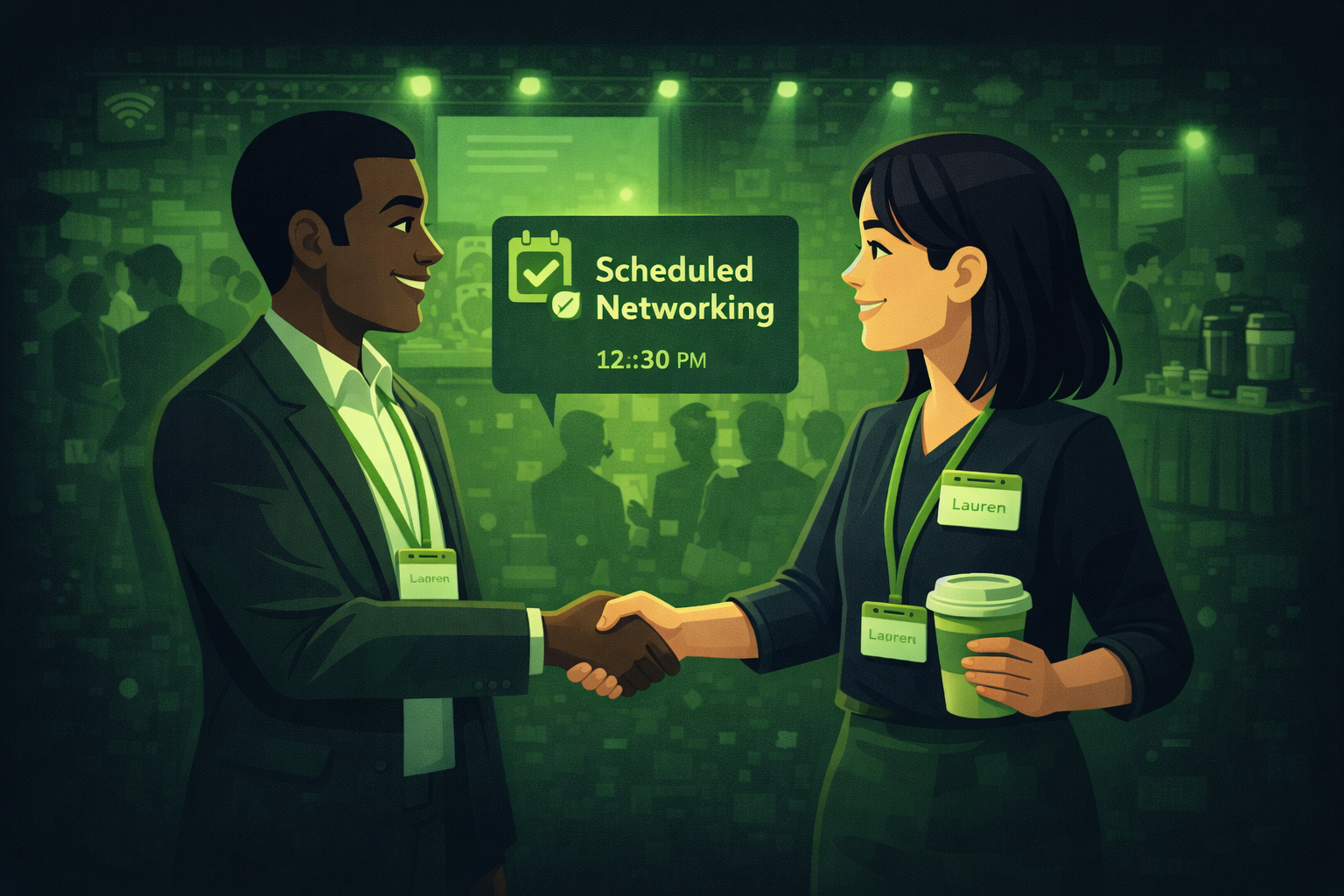
AI-powered attendee matchmaking uses algorithms to connect event attendees based on their goals, roles, and interests. It works before, during, and after your event to surface the connections most likely to create business value.
Networking is the number one reason most people attend professional events.
But traditional networking is mostly luck. You walk into a room of 500 people and hope you end up in the right conversation at the right time. Most attendees leave with a handful of business cards from people they will never speak to again.
AI-powered attendee matchmaking changes this completely. Instead of leaving connections to chance, it analyses what each attendee is looking for and connects them with the people most likely to be useful to them. The result is better conversations, higher attendee satisfaction, and stronger ROI for your event.
This guide explains how AI matchmaking works, what data it uses, which tools are worth looking at, and how to set it up for your next event.
One event using AI-powered matchmaking recorded a 39% meeting acceptance rate and generated 2,800 one-to-one meetings at a two-day conference. Without AI matchmaking, most events average far fewer meaningful connections per attendee. Source: Brella case study, TechBBQ, 2025.
What is AI-powered attendee matchmaking?
AI-powered attendee matchmaking is a system that uses data about your attendees to suggest who they should meet at your event. It goes well beyond sorting people by job title or industry.
A good matchmaking system looks at what each attendee is trying to achieve. Someone looking for a supplier has different needs from someone looking for a new job or someone trying to find a co-founder. Matching people with the same job title is not useful if their goals are completely different.
The AI looks at goals, interests, expertise, company type, and behaviour at the event to find connections with the highest chance of being valuable to both people.
Matchmaking vs networking: what is the difference?
Traditional networking is open-ended. Attendees choose who to approach based on what they can see: a name badge, a friendly face, or someone standing alone. AI matchmaking is structured. Attendees receive a curated shortlist of people they should meet, with suggested times and a reason for the connection. The result is fewer wasted conversations and more meetings that lead somewhere.
How does AI matchmaking work?
Most AI matchmaking systems work in 4 stages.
Stage 1: Data collection
When attendees register, they fill in a profile. This includes their job title, company, industry, and areas of interest. Most systems also ask attendees to state their goals for the event: are they looking to buy, sell, hire, learn, or partner? This goal data is the most important input of all.
The more detail attendees provide, the better the matches will be. This is why the registration process matters. A two-minute profile gives the AI far more to work with than a name and email address.
Stage 2: The matching algorithm
The AI looks at every attendee profile and calculates a compatibility score for each possible pair. It considers:
Shared interests and overlapping expertise
Complementary goals (one person wants to buy what the other sells)
Company size and stage (a seed-stage startup may not need an enterprise supplier)
Industry and sector alignment
Previous connections (to avoid suggesting people who already know each other)
Each attendee then receives a ranked shortlist of suggested connections, usually between 10 and 30 people depending on the event size.
Stage 3: Meeting scheduling
Once matches are suggested, attendees can request meetings with the people they want to connect with. The system handles the scheduling automatically. It finds a time that works for both people, books a table or meeting room, and sends a confirmation to both.
This is one of the biggest time savings for event organisers. Instead of managing hundreds of meeting requests manually, the system handles all of it.
Stage 4: Learning and improving
The best AI matchmaking systems learn from attendee behaviour. If Person A accepts a meeting with Person C but declines one with Person B, the system takes note. Over time, it gets better at predicting which connections will be accepted and which will be ignored.
This means the system improves not just within one event but across all your events over time. The more events you run on the same platform, the smarter the matching gets.
What data does AI matchmaking use?
The quality of your matches depends entirely on the quality of your data. Here is what most AI matchmaking systems use.
| Data type | What it tells the AI | How important |
|---|---|---|
| Attendee goals | What each person is trying to achieve at this event | Essential |
| Areas of interest | Topics, industries, or challenges they care about | Essential |
| Job title and company | Seniority level and company type | Important |
| Industry and sector | Which market they operate in | Important |
| Session attendance | Which topics they chose to learn about at the event | Useful |
| Profile views | Who they looked at but did not connect with yet | Useful |
| Previous meetings | Who they have already met so they are not suggested again | Useful |
| Meeting outcomes | Whether past suggested meetings were accepted or declined | Very useful (over time) |
The most important thing to get right
The goal question in your registration form is more important than any other data point. Asking 'What are you hoping to achieve at this event?' and offering structured options (find a supplier, find a partner, hire someone, learn, get investment, sell my product) gives the AI exactly what it needs to make useful matches. A vague free-text field is much less useful than a structured dropdown.
The best AI matchmaking tools in 2026
There are several platforms that offer AI-powered attendee matchmaking. Here are the main options worth knowing about in 2026.
Brella
One of the most established names in AI matchmaking for events. Brella focuses on intent-based matching, meaning it prioritises what attendees want to achieve over basic demographic similarity. It handles the full workflow from profile creation to meeting scheduling to post-event analytics. Best suited for B2B conferences and trade shows.
Grip
Grip markets itself as an event networking platform built for business relationships. Its AI matchmaking system analyses attendee profiles, stated objectives, and behavioural data to generate curated connection suggestions. It also includes a white-label mobile app, badge scanning, and lead retrieval tools. Strong choice for large conferences and trade shows where sponsors need to meet the right buyers.
Swapcard
Swapcard combines AI matchmaking with event app features, content recommendations, and exhibitor tools. It is a strong option for hybrid events where you need to connect in-person and online attendees in the same matchmaking system. Pricing starts from around 520 euros per year for smaller events.
Glue Up
Glue Up is an all-in-one event and membership management platform that includes AI matchmaking as part of a broader feature set. It is a good option for associations and membership organisations that run multiple events on the same platform. The matchmaking data improves across events as the system learns from member behaviour.
Jublia
Jublia is designed specifically for B2B engagement at trade shows and business events. Its matchmaking system uses attendee profiles, stated objectives, and behavioural signals such as content interactions and bookmark activity. Strong analytics dashboard for organisers. Good choice if measuring networking ROI is a priority for your client.
Always ask for a demo before committing to any of these platforms. The quality of the matchmaking algorithm varies significantly between tools. Ask the platform to show you data from a real event: what was the average meeting acceptance rate, how many meetings were held per attendee, and what did attendees say about the quality of the connections.
How to set up AI matchmaking for your event
Setting up AI matchmaking for the first time feels daunting. Here is a simple step by step process.
Step 1: Choose your platform early
Do not leave this until 2 weeks before the event. AI matchmaking needs time to collect profile data, generate matches, and let attendees schedule meetings. Start the platform setup at least 6 to 8 weeks before the event.
Step 2: Design your registration form carefully
The registration form is where matchmaking quality is won or lost. Include a goals question with structured options. Include an interests section with relevant categories for your event topic. Keep it short: 4 to 6 questions is enough. Every extra question reduces completion rates.
Step 3: Encourage profile completion before the event
Send reminder emails to attendees who have not completed their profile. Tell them that a complete profile means better connections. Most platforms show a profile completion percentage in the app. Gamifying this (show a 'top connector' badge for full profiles) increases completion rates.
Step 4: Open the platform to attendees at least 2 weeks before the event
Give attendees time to browse their matches and request meetings before the event day. Meetings booked in advance have much higher attendance rates than meetings booked on the day. Most of your meeting volume will happen in the week before the event if you open the platform early enough.
Step 5: Create a dedicated networking area at the venue
AI matchmaking only works if attendees have a comfortable place to meet. Set aside a clearly signposted networking area with tables, chairs, and good acoustics. Number the tables so attendees can find each other easily. Make sure the area is separate enough from the main sessions that conversations are not disrupted by background noise.
Step 6: Measure the results
After the event, pull the matchmaking analytics from your platform. Key metrics to report to your client or stakeholders:
Total meetings held
Meeting acceptance rate (meetings held divided by meetings requested)
Average meetings per attendee
Profile completion rate
Attendee satisfaction score for networking (from your post-event survey)
Common mistakes to avoid
Starting too late
If you only open the matchmaking platform a few days before the event, most attendees will not have time to request meetings. The platform needs at least 2 weeks of run time before the event date.
Collecting too little data at registration
Name, company, and job title alone gives the AI very little to work with. The matches will be generic and unhelpful. Always include a goals question and an interests section in registration.
Not promoting the matchmaking feature
If attendees do not know the matchmaking platform exists, they will not use it. Mention it in your registration confirmation email, your practical info email, and on the day from the stage. Show attendees how to use it in the first 10 minutes of the event.
Over-relying on the algorithm
AI matchmaking is very good at finding relevant connections. But it cannot replace every form of networking. Keep some open networking time in your programme where attendees can connect with people the algorithm did not suggest. Serendipity still has value.
A note on data and privacy
AI matchmaking systems collect and process personal data about your attendees. Make sure your registration form includes a clear explanation of how this data will be used. Check that your chosen platform is GDPR compliant if you are running events in Europe. Ask the platform where data is stored, how long it is kept, and whether it is shared with third parties. This is not optional. It is a legal requirement.
How do you choose the right AI matchmaking tool for your event?
Not every AI matchmaking platform suits every event. The right tool depends on your event size, your audience type, and how technically confident your team is. Here are five things to check before you commit to any platform.
1. Does it match your event format? Some tools are built for in-person conferences. Others are designed for hybrid or virtual events. A platform that handles hybrid matchmaking well will connect online and in-person attendees for scheduled video calls. Ask the vendor directly whether their tool works for your specific format before booking a demo.
2. How much data does the algorithm need? Some platforms produce good matches from basic registration data (job title, company, goals). Others need attendees to complete a detailed profile before the algorithm becomes useful. If your audience is unlikely to spend time filling in long profiles, choose a platform that works well with minimal data.
3. Does it integrate with your existing registration system? If your attendees register on Eventbrite, Cvent, or your own website, check whether the matchmaking platform can import that data automatically. A manual CSV upload process adds time and introduces errors. Integration saves both.
4. What does the attendee experience look like on mobile? Most attendees use the matchmaking platform on their phone at the event. Ask to see a demo of the mobile app before you sign anything. A clunky mobile experience means attendees will not use it, regardless of how good the algorithm is.
5. What analytics does it give you after the event? The best platforms show you total meetings held, meeting acceptance rates, and profile completion rates. This data is what you use to prove networking ROI to your client or stakeholder. If a platform cannot give you these numbers, it is harder to justify the cost next time.
The one question to ask on every demo
Ask the vendor: 'What percentage of attendees at a typical event of our size request at least one meeting?' A good platform should be able to give you a benchmark figure from their client data. If they cannot answer this question, they do not have enough evidence that the tool actually drives networking behaviour, not just match suggestions.
What happens to AI matchmaking when attendees register at the last minute?
Last-minute registrations are one of the most common practical problems with AI matchmaking. Most platforms generate the initial batch of matches 5 to 14 days before the event. An attendee who registers two days before the event is added to the pool late, which means the algorithm has less time to find and surface them to other attendees.
The good news is that most modern platforms handle this automatically. When a new attendee completes their profile, the algorithm runs again and generates matches for them. Their profile also gets added to the suggestion lists of other attendees whose criteria they match. The system does not stop working at a cut-off date.
The practical limitation is time. A late registrant has fewer hours to browse their matches, request meetings, and get responses before the event starts. To reduce this problem, send a dedicated email to all last-minute registrants on the day they register. Tell them the matchmaking platform is live, show them how to complete their profile, and remind them that the networking schedule fills up fast. This simple step significantly improves engagement from late registrants.
Close your matchmaking platform 24 hours before the event, not on the day
If you leave meeting scheduling open until the morning of the event, attendees will request meetings with no time to confirm them. This creates confusion and no-shows. Close new meeting requests 24 hours before doors open. Attendees can still browse profiles and message each other, but the formal schedule locks in the night before.
Questions people ask about AI attendee matchmaking
What is AI-powered attendee matchmaking?
AI-powered attendee matchmaking is a system that analyses attendee profiles, goals, and interests to suggest who each person should meet at your event. It then handles meeting scheduling automatically. The result is more relevant connections and fewer wasted networking conversations.
How much does AI matchmaking cost?
Pricing varies widely depending on the platform and event size. Some platforms like Swapcard start from around 520 euros per year for smaller events. Enterprise platforms like Grip and Brella typically charge based on attendee numbers and features required. Always ask for a tailored quote based on your event size and the features you actually need.
Does AI matchmaking work for small events?
It works best when there are at least 50 to 100 attendees. Below that, the number of possible connections is small enough that you could manage matchmaking manually. For events of 100 or more attendees, the time savings and quality improvement from AI matchmaking become very clear.
Does AI matchmaking work for virtual and hybrid events?
Yes. Most of the major platforms support virtual and hybrid formats. For virtual events, the matchmaking system handles video call links instead of meeting room bookings. For hybrid events, the system can connect in-person and online attendees and arrange calls for pairs where one person is attending remotely.
How do I get attendees to actually use the matchmaking platform?
Mention it at every touchpoint before and during the event. Include it in your registration confirmation, your practical info email, and your day before reminder. On the day, have your MC mention it from the stage in the first 10 minutes. If your platform has a mobile app, make sure the event programme links to it. Completion rates go up significantly when attendees understand the value of filling in their profile.
Can I use ChatGPT for attendee matchmaking instead of a dedicated tool?
ChatGPT alone cannot manage real-time meeting scheduling, handle mutual availability, or learn from attendee behaviour across events. However, you can use ChatGPT to write your registration form questions, draft the emails that encourage attendees to complete their profiles, and write the copy that explains the matchmaking feature to attendees. Use a dedicated matchmaking platform for the matching itself.
How do you choose the best AI matchmaking tool for your event?
Check five things: whether the platform supports your event format (in-person, hybrid, or virtual), how much data the algorithm needs to produce good matches, whether it integrates with your registration system, what the mobile experience looks like for attendees, and what analytics it provides after the event. Always request a demo and ask for benchmark data on meeting acceptance rates from similar events.
How Does AI Matchmaking Handle Last-Minute Registration Changes?
Someone can register the night before your event. The algorithm may not have processed them yet. That gap is the problem many planners worry about.
Tools like Brella and Swapcard process new registrants in real time. They use registration form answers and job title to generate connection recommendations within minutes of sign-up.
Does AI Matchmaking Help Identify High-Value Connections?
Yes. AI looks at job seniority, company size, stated goals, and past meeting behaviour to surface connections that are more likely to produce real business outcomes.
Clarion Events reported a 44% increase in in-person meetings after implementing AI matchmaking.
What Should You Consider Before Switching to AI-Driven Matchmaking?
Three things matter most. How attendees interact with the tool (app vs email vs web). Whether it integrates with your registration platform. How much data you collect at registration.
The more detail you collect at registration (role, goals, topics, who they want to meet), the better the matches. Thin registration data produces weak recommendations.
How Does AI Matchmaking Affect Attendee Satisfaction?
Attendee satisfaction at events is closely tied to the quality of connections made. Random networking produces mixed results. AI matchmaking surfaces relevant connections before attendees even arrive.
Freeman's research found that 40% of attendees aged 23 to 46 find networking awkward. Pre-event curated connection recommendations, which AI matchmaking provides, directly reduce that friction.
| Platform | Best for | Standout AI feature | Pricing |
|---|---|---|---|
| Brella | Conference networking | Pre-event meeting scheduler | From $5,000/event |
| Grip | Trade shows and B2B events | AI recommendation engine | Custom pricing |
| Swapcard | Large conferences | Exhibitor lead gen + matchmaking | From $3,500/event |
| Bizzabo | Enterprise B2B events | Klik SmartBadge data | Custom pricing |
| Whova | Mid-size conferences | Community + networking combined | From $2,000/event |
What happens to AI matchmaking when attendees register at the last minute?
Most platforms add late registrants to the matching pool automatically when they complete their profile. The algorithm re-runs and generates matches for them, and their profile appears in the suggestion lists of other attendees they match with. The main limitation is time: late registrants have fewer hours to request meetings before the event. Send a dedicated onboarding email to all last-minute registrants on the day they register to maximise their engagement.
Final thoughts
Networking is why most people attend events. If your networking is poor, the rest of your event can be excellent and people will still leave disappointed.
AI-powered matchmaking does not guarantee great connections. But it makes great connections significantly more likely. It removes the luck factor, gives introverted attendees a structured way to network, and gives your client data that shows the networking at their event was measurable and valuable.
Start with one event. Pick one of the platforms above, set it up with a clear goals question in registration, open it 2 weeks before the event, and measure what happens. The results will tell you whether to use it on every event you run going forward.
Your matchmaking is only as good as your signup data. See how to collect the right registration data for AI matchmaking for practical field ideas.
Running hybrid? Start with AI matchmaking across in-person and virtual audiences.
The next post in this series covers how to use AI for event ROI reporting. It is one of the most asked questions in event planning right now and AI can help you turn raw data into a clear report your client will trust. Subscribe below to get it.
Related posts
Keep reading
The Best ChatGPT Alternatives for Event Planning: What to Use Instead
ChatGPT shines at drafting text. Specialist event platforms shine at registration, onsite ops, and analytics. Match the tool to the job, and pair tools instead of replacing one with another.
How AI is Changing Event Registration: What Every Planner Should Know in 2026
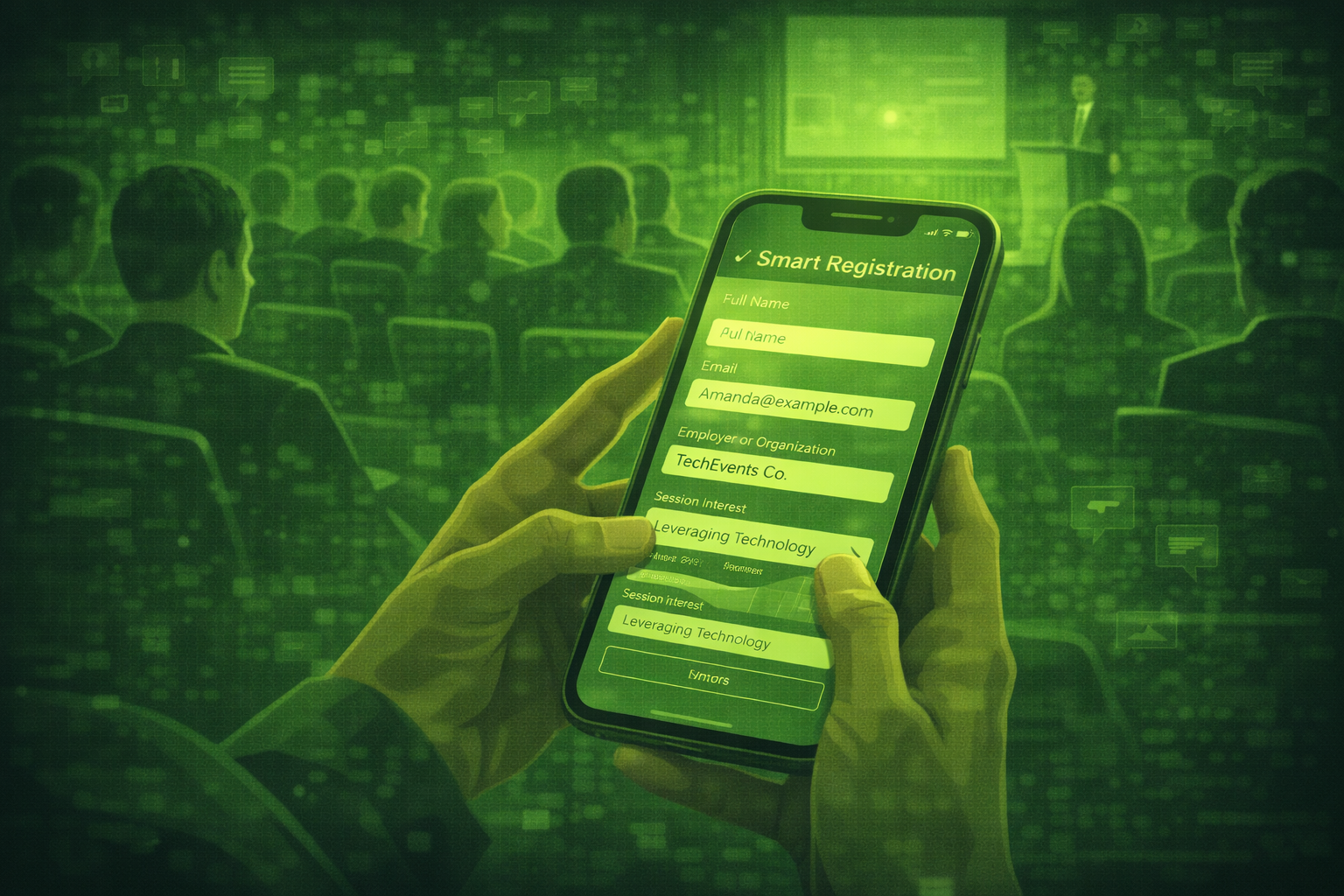
AI event registration personalises questions, pricing paths, and follow-up emails based on profile signals. You still need clear consent rules and clean data hygiene.

Using AI for Event Speaker Management: From Sourcing to Post-Event Recap
AI can help you source ideas, draft contracts and briefs, and write recap notes. You still own relationships, approvals, and anything that goes on stage.