Free Event Budget Calculator for Event Planners
Split your event budget across every cost category in seconds.
- Free
- No signup needed
- Works on mobile
Choose your event type, enter your guest count, and type in your total budget. The calculator splits it across every cost category instantly. You can compare a few event types if you are still deciding format. Each type uses a different default split because virtual events spend more on streaming and less on catering.
| Category | Share | Suggested |
|---|---|---|
| Venue | 28% | $21,000 |
| Catering | 22% | $16,500 |
| AV & production | 14% | $10,500 |
| Marketing | 10% | $7,500 |
| Staffing | 8% | $6,000 |
| Contingency | 10% | $7,500 |
| Misc | 8% | $6,000 |
Approximate 625 USD per guest. Adjust categories with your quotes — this is a planning starting point.
The remaining small gap after allocation is left on purpose. It gives you room to move money between categories as real vendor quotes come in. Download the CSV and paste it into your budget spreadsheet as a starting template. Keep a change log when you move money between lines so finance can follow your reasoning later.
How to use this tool
Step 1: Choose your event type from the dropdown. This changes the default percentage splits.
Step 2: Enter your expected guest count using the slider.
Step 3: Type your total budget into the budget field.
Step 4: Read your suggested budget split in the results table below.
Step 5: Click Download CSV to export the breakdown to a spreadsheet.
Why event planners use this
Building an event budget from scratch takes time. Most planners start with a blank spreadsheet and try to remember every cost category from the last event they ran. Important things get missed. The backup fund gets forgotten. The AV fee appears as a surprise on the invoice.
A shared split also helps your first client conversation. You can show where money should sit before you sign contracts. That builds trust. It also helps you say no when a sponsor package is too small for the work you must deliver.
This calculator gives you a complete starting structure in seconds. It covers every major cost area from venue hire and catering to staff meals and event insurance. If you want to go deeper, our how to use AI to build an event budget guide shows you prompts that turn this starting structure into a full line-item budget.
Take a 200-person annual conference with a total budget of 40,000. Without a framework, you might allocate too much to the venue and realise too late that you have left almost nothing for speakers, AV, and marketing. Bizzabo and similar platforms help when you want one place to track spend once you move from a draft to a live plan.
The backup fund row is the most important part of this calculator. We set it to 12% by default. Most professional event planners keep 10 to 15% in reserve. Once you have your budget structure, use our ChatGPT prompts for event planning to build out each line item, and our how to use AI for event ROI reporting guide to prove the value of the event to your client afterwards.
Real quotes will shift your percentages. A venue may include basic AV while another charges extra. Catering may bundle service staff or add a per-hour fee. Treat the calculator as a map, not a contract. Update each line as proposals arrive. When one category goes up, decide whether to cut another line or ask the client for more budget before you sign.
Finance teams often ask for a one-page summary. Export the table, add three bullets on risk, and note your backup fund. That single page should match the line items you later paste into your finance system. If your company uses cost centres, tag each category now so your close process is faster after the event.
Example output
Scenario. A 200-person annual conference, one full day, city centre hotel, total budget 40,000.
Input. Event type: Conference. Guest count: 200. Total budget: 40,000.
| Category | Suggested amount | Percentage |
|---|---|---|
| Venue hire | 10,400 | 26% |
| Food and drink | 9,200 | 23% |
| Audio and visual | 5,200 | 13% |
| Speakers | 3,600 | 9% |
| Marketing | 2,400 | 6% |
| Staffing | 2,000 | 5% |
| Admin costs | 1,200 | 3% |
| Backup fund | 5,000 | 12.5% |
| Total allocated | 39,000 | 97.5% |
Related guides
Strategic reads
How to Use AI to Build an Event Budget: Step by Step with Real Prompts
Learn how to use AI and ChatGPT to build a complete event budget. Includes 7 copy-ready prompts, a budget category table, tips for cutting costs without cutting quality, and a free tracking template.

How to Use ChatGPT for Event Planning: 15 Prompts That Actually Work
15 copy-ready ChatGPT prompts for event planners covering agendas, run-of-show documents, emails, vendor briefs, risk planning, and post-event reports. Tested, specific, and ready to use today.
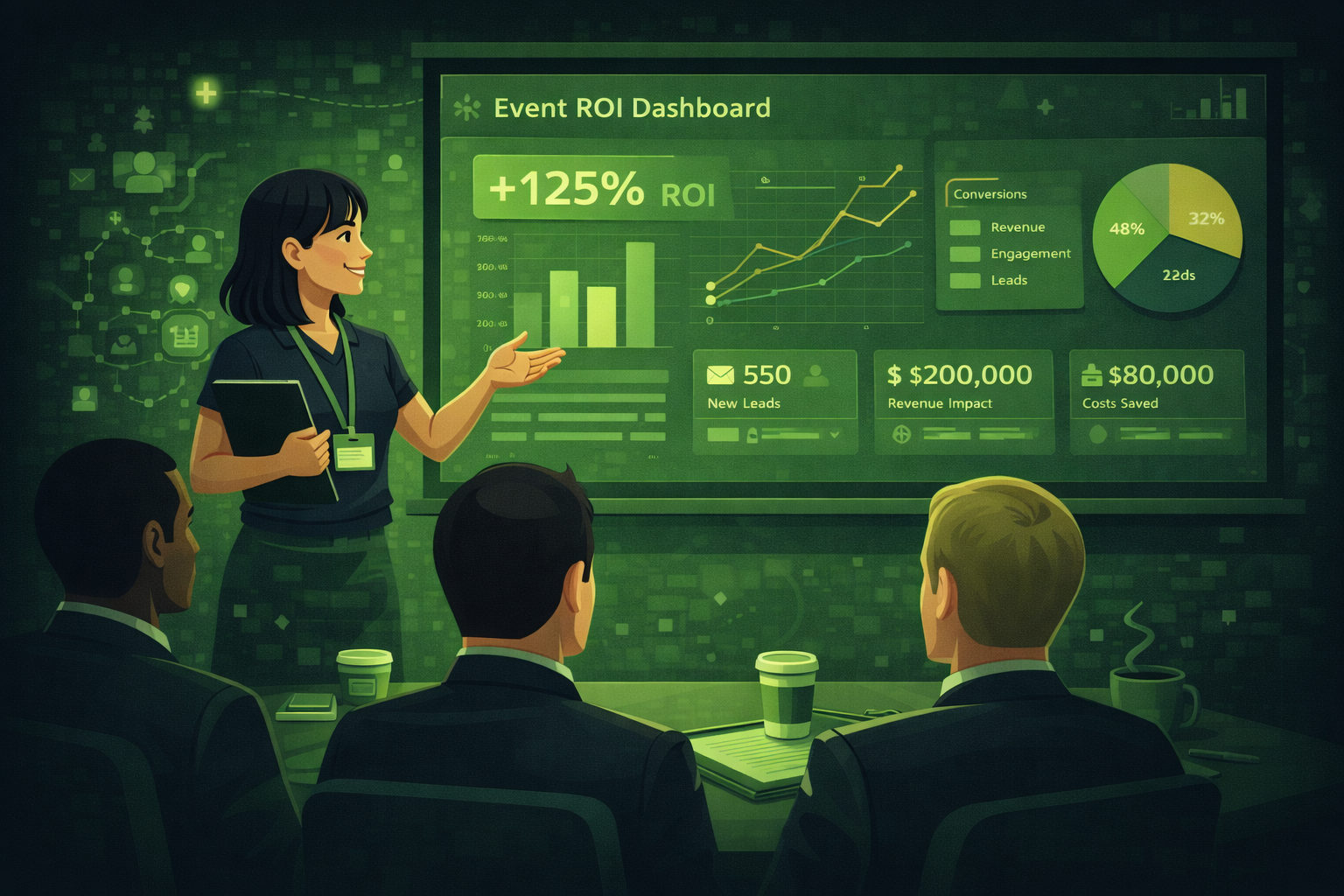
How to Use AI for Event ROI Reporting: Prove the Value of Your Events
Learn how to use AI to build event ROI reports that stakeholders actually trust. Covers the key metrics to track, 6 copy-ready prompts.
Frequently asked questions
- How do I calculate an event budget?
- Start with your total spend cap, then split it across categories that match your event type. Venue, food and drink, AV, speakers, marketing, staffing, and admin should each have a line. You should also hold 10 to 15% in a backup fund. This calculator does the split for you. After that, replace estimates with real vendor quotes. Your final budget should always be built from signed proposals, not guesses.
- What percentage of an event budget should go to venue hire?
- For most in-person events, venue hire takes 25 to 35% of the total budget. City centre locations and peak dates push you toward the higher end. Smaller events at non-traditional venues can come in lower. Hybrid events often spend less on venue and more on streaming. Always read what is included in the hire, such as furniture, security, and Wi-Fi, before you lock the percentage.
- How much should I budget for AV at a conference?
- AV often lands between 10 and 15% of the total conference budget. That range covers screens, microphones, lighting, and technician time. Live streaming, recording, and complex staging move you toward the top of the range. Ask for an itemised quote early. AV is one of the fastest categories to change once you add sessions or change room layouts.
- What is a contingency fund in event planning?
- A contingency fund is money you reserve for costs you cannot name in advance. Most planners use 10 to 15%. You might spend it on overtime, extra meals, equipment failure, or a late speaker change. You should show the line as a real part of the budget, not a hidden buffer. Good clients accept it when you explain why it exists.
- Can I use this calculator for virtual or hybrid events?
- Yes. Select Virtual or Hybrid from the dropdown. The splits shift toward technology and production when you reduce venue and catering. Hybrid events blend both profiles. You should still check that your streaming, platform, and remote speaker support are fully priced. Virtual events are not automatically cheaper overall.
- How accurate are the suggested budget splits?
- They are strong starting points based on typical ranges, not a substitute for quotes. Your market, suppliers, and risk profile will change the final numbers. Use the output to align your team, then refine each line as data arrives. The goal is a defensible first draft, not a promise to a client.
More free event planning tools
-
Free Event Planning Timeline Generator
Work backwards from your event date with phased tasks for planning, production, and follow-up.
Open tool → -
Free Event ROI Calculator for Planners
Compare revenue streams to costs and see ROI per attendee.
Open tool → -
ChatGPT Prompt Builder for Event Planners
Generate copy-ready prompts for budgets, run-of-show, venue emails, agendas, and reports.
Open tool →